ETHIOPIAN JEWS ( SO-CALLED FALASHAS)(Talk given 1996 – 1997 to various groups mainly in Synagogues.)
For some years now small communities of Jews, cut off from mainstream Judaism, have been found in many parts of the world. In Kaifeng, in China, where they have all but died out. In Cochin, in S.W. India on the Malabar Coast, which my wife and I visited some time ago where barely a handful of Jews remained. When we visited the small, isolated, island of St Helena in the South Atlantic last year we found a 200 year old Jewish connection. The main activity of the island is still carried on through a company called – Solomon & Co! It is named after the founder Saul Solomon, a young Jew from England who, 200 years ago, was landed there after he fell ill on a boat bound for India. When he recovered he founded that company, and it was continued by him and his family who joined him, for generation after generation.
But there are no stories that can compare with the story of the Ethiopian Jews, the so-called Falashas, and their near-miraculous move to Israel.
IN May 1991, in an operation called ‘Operation Solomon’ carried on over a single weekend, 14,200 Ethiopian Jews were airlifted from Ethiopia to Israel. Six or seven years previously, in 1984/85, in an operation called ‘Operation Moses’ about 8,000 Ethiopian Jews had been airlifted to Israel. By the end of 1992 in effect, all remaining Ethiopian Jews had been brought bit by bit to Israel. The Ethiopian community in Israel now number about 60,000 – about 1% of the population. There remain in Ethiopia a large number of ‘Falash Mura’ – Ethiopians who had been Jews but had converted, mainly to Christianity, who now wanted to treated as Jews and taken to Israel. More about them later.
Who are these Ethiopian Jews and why were they called Falashas? How did they get to Ethiopia? What form of Judaism did they practise. And how have they fared since they arrived in Israel? Well, let us see.
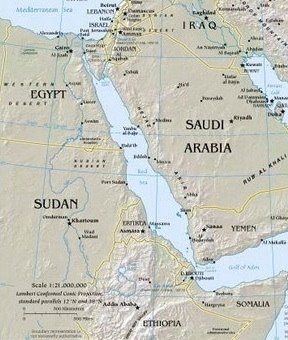
Who are these Ethiopian Jews?
First, a word about the name ‘Falasha’. The name means ‘stranger’ or ‘wanderer’ or ‘exile’. It was originally used in a pejorative sense, but the name stuck and that is how they became known to the outside world. They prefer to be called Ethiopian Jews – although, in some contexts, the word ‘Falasha’ will be inevitable. They will perhaps not mind me telling this little story about a visit to Israel with my family, when my youngest daughter, who had heard the word Falashas so frequently that, in a café when meaning to order two falafels, ordered, “Two Falashas, please”!
Since arriving in Israel they have been subject to radically new influences which clearly are altering their way of life. We will discuss this later. Much of what I have to say describes their way of life while they were still in Ethiopia.
The Ethiopian Jews consider themselves Jews in origin and faith. They call themselves ‘Beta Israel’ (House of Israel). They practised a Judaism based on the Torah. Basically, their Festivals and Practices belonged to that period of Jewish history of several centuries BCE, ie, over 2,000 years ago. Since then, they were cut off from the rest of the Jewish world and learned nothing about Talmud or Rabbinic Judaism (which has fixed so much of our understanding of Judaism). In fact for most of those 2,000 years they thought they were the only Jews left in the world!
How did they get to Ethiopia?
According to their own tradition they are descended from the love affair, 3,000 years ago, between King Solomon and the Queen of Sheba (who is thought to have ruled in the Yemen/Ethiopia area). She had brought 4-1/2 tons of gold for his Temple, and in return he gave her, in the very words of the Bible, "all she desired". The result was that she became pregnant and gave birth to Menelik.

Arrival of the Queen of Sheba in Jerusalem.
When Menelik grew up he returned to Jerusalem to study, and when he went home to Ethiopia a number of Jews went with him. They, says the tradition, are the ancestors of the Ethiopian Jews. But the other Ethiopians also claim descent from Menelik. Perhaps so, say the Ethiopian Jews, but on his journey back some of Menelik's sinful companions crossed a river on the Sabbath, and they are the ancestors of the other Ethiopians; the Ethiopian Jews are descended from those who waited until after the Sabbath.
The apocryphal Book of Jubilees, written in Temple times and which requires strict obedience to Torah rules, is a strict part of the Ethiopian Jews’ religion. It forbids any travel on Shabbat. They know nothing of the later Rabbinical easing of the travel rules. A problem arose in 1991. That airlift took place on Shabbat - but this time they were given official dispensation by the Israeli Rabbinate. So the 1991 journey was quite kosher.
Another tradition says they are descended from Moses who was for a while, they say, King of Ethiopia (the Biblical Cush). The Bible says that Moses had a black Cushite wife and it caused trouble with his family. A number of Israelis already have 'black Cushite' Ethiopian wives; one hopes it does not cause the same trouble.
Yet another tradition says they are descended from those Israelites who were unable to cross the Red Sea during the Exodus from Egypt, and who turned south for safety. Some say that they are descended from the tribe of Dan, one of the ten tribes who were taken into captivity in 722 BCE, who escaped from the Assyrian invaders and found their way south through Egypt to Ethiopia. Another tradition is that the Ark of the Covenant is buried somewhere in the Aksum area of North Ethiopia.
Like most traditions there may be some truth in these stories - but probably not much. Scientific investigation suggests an origin that is less romantic but still very exciting. At that time many Jews had migrated from the Land of Israel and were living in many parts of the then known world. It is estimated that during the 1st century there were three times as many Jews living outside the country as inside. And they carried their religion with them.
Alexandria, for example, had a very large Jewish population and the Septuagint bible had been translated into Greek for them. Many Jews had settled in what is now Yemen and which was then closely associated with Ethiopia. It is thought that many of these Jews may have migrated further into northern Ethiopia. Judaism went with them and many of the pagan tribes, among whom they settled, adopted Judaism.
There was also a substantial settlement of Jews on Elephantine Island (it means City of Ivory) on the Nile at Assuan in Egypt, near the first cataract. (My wife and I were able to visit it some years ago). The Egyptians had an important garrison and trading post there and Jews had been living there for centuries, some as mercenary soldiers and some as traders.Some are thought to have migrated south to Ethiopia, taking their religion with them and spreading it among the indigenous tribes there.
Jews and Judaism became entrenched in the north of Ethiopia long before Christianity, or Islam, reached that country. It is more a case of Judaism being brought to Ethiopia by a comparatively small number of Jews who converted the local tribes, rather than part of Ethiopia being settled by large numbers of Jews from the Land of Israel. This perhaps explains the predominately black colour of the Ethiopian Jews. In outward appearance the Ethiopian Jews could not be distinguished from their neighbours.Some travellers claimed a closeness to the semitic type, others deny there is any whatsoever. No anthropological study has yet been carried out.
In the 4th century much of Ethiopia was converted to Christianity and it brought with it the usual religious problems (accusations of deicide etc). Islam arrived in the 7th century, but Christianity remained dominant. There were many wars involving Jews, Christians and Moslems. Many Jews converted, and the remaining Jews were herded into the Gondar area around Lake Tana in the north, where they remained. They maintained their autonomy until the 17th century, with their own Kings (named Gideon) and Queens (named Judith or Esther).
In the 17th century they were finally defeated. Their land was confiscated, and those who refused to convert were forced to live as second class citizens and to them was given the name ‘Falesi’ or ‘Falash’, meaning ‘stranger’ or ‘wanderer’. They were not allowed to own land and lived under harsh tenancy terms.Later their position eased somewhat, and they were able to continue practising their religion. But intense missionary activity continued, not only by local missionaries, but also by missionaries from abroad.
What form of Judaism did they practise?
Their religious practices are changing in Israel. The following is how they practised Judaism while still in Ethiopia. Basically, it is the religion of pre- Rabbinic times. They celebrate diligently the Biblical festivals - Pesach, Rosh Hashana, Yom Kippur, Succot,Shavuot, Rosh Chodesh etc but knew nothing of Channukah or Tisha B’Av. They probably forgot or never knew Hebrew.
The Bible they used is the same as that used by the Christian Ethiopians. It is the Septuagint Bible that was translated into Greek and later translated for the Ethiopian Christians into the Ge'ez or Ethiopic language. Ge’ez is an old Ethiopian language that is used for liturgical, religious purposes by both Ethiopian Christians and Jews. It is read from left to right. Both used the vernacular language of Amharic for day to day purposes.
The Ethiopian Jews observe the Sabbath rigorously; all work (including sexual intercourse) is strictly forbidden. In every village a hut was set aside as a "mesgid" (synagogue) where prayer services were held and outside which the paschal lamb was sacrificed on Pesach. They have priests, (‘Cahanet’) who claim descent from Aaron.
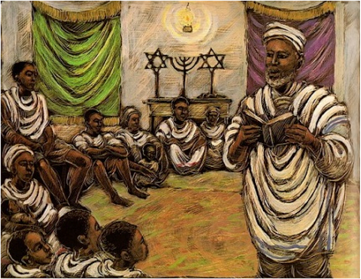
Falasha Priest (Cahan) in their synagogue.
They pay particular attention to the laws of purity, especially regarding menstruation and childbirth. They keep themselves clean and the other Ethiopians said they "smell of water". They firmly believe in the one God who has chosen His people, and would send a Messiah who would return them to the Holy Land. They believe in the World to Come, and in a form of Heaven and Hell, and also in the resurrection of the dead. In their prayers there is no Amidah, Kaddish or Kiddush or Havdalah.
Ethiopian Jews circumcise their sons at 8 days. They also used to circumcise their daughters, a practice they almost certainly learned from their neighbours. They bury their dead within 24 hours, mourn for 7 days and have a special ceremony after a year. Ethiopian Jews and Christians share words of Hebrew origin, and some religious practices in common. It is difficult to know whether they were introduced into Ethiopia by Judaism or Christianity. Some Ethiopian Jews lived as celibate monks and nuns - almost certainly they adopted this from the Christians. In some ways the religion practised by the Ethiopian Jews was a strange mixture of Pagan, Christian and Jewish beliefs and practices.
What contacts have there been between the Ethiopian Jews and the outside world?
The historian Gibbon said that “Ethiopia had slept for a thousand years”. In the 16th century Rabbi David ibn Zimra of Cairo, who had heard tell of the Ethiopian Jews, said they were “of the seed of Israel, of the tribe of Dan”. There had been other vague references to their existence but the first real contact with the outside world was in the 16th and 17th centuries with Portuguese and Spanish explorers (most of them Catholic missionaries). Later, Protestant missionaries took an interest but no real Jewish interest started until the second half of the 19th century - only a little over a hundred years ago.
In 1867 the French Alliance Israelite Universelle sent the Jewish orientalist Joseph Halevy to Ethiopia. Halevy was convinced of their Jewishness and encouraged his pupil Jacques Faitlovitch to become concerned with them. In 1904 Faitlovitch spent 18 months living among the Ethiopian Jews and it is owing to him that much knowledge and interest about them developed. In 1906, on his return to France, Faitlovitch obtained a letter signed by 44 leading Western Rabbis proclaiming them "our flesh and blood”.
But, two years later, the French sent Rabbi Haim Nahum to Ethiopia and he reported that they were very few in number, they were widely scattered, they were very primitive and would not benefit by education – and, in any event, he doubted their Jewishness. He said no further interest should be taken in them. This gave the French and the diaspora an excuse to do very little, but in spite of the opposition Faitlovitch persevered and a number of schools were started in the Jewish areas of Ethiopia.
The conquest in 1936 of Abyssinia (as Ethiopia was then known) by fascist Italy made the position worse for the Ethiopian Jews. Early in WW2 Abyssinia was liberated by the British. Part of the British army was commanded by Orde Wingate who called his units ‘Gideon Force’. Wingate probably knew nothing about the Falashas, and it was probably a coincidence that he gave his force the same name as the earlier Kings of the Ethiopian Jews.
During the period just after WW2 Jewish effort was directed at the consequences of the Holoaust (the Shoah), and the founding of the State of Israel. The Ethiopian Jews had to fend for themselves.
How did they get to Israel?
(1) Operation Moses.
In 1921 the Ashkenazi Chief Rabbi of Palestine and in 1973 the Sephardi Chief Rabbi of Israel appealed for them to be saved from extinction and brought to the Land of Israel. In 1975 Israel ruled that Ethiopian Jews were entitled to automatic citizenship under the 1950 Law of Return. Not all Rabbis agreed to treat them as Jews.
It had taken many years for Ethiopia to recognise Israel and exchange Ambassadors. Internationally Ethiopia remained neutral between Israel and Arab countries. Many contacts had developed economically and educationally, including an air link between Israel and Addis Ababa. These links proved of great value later. The period since 1973 has been momentous for the Ethiopian Jews. The true picture remained obscure because of the necessary secrecy that had to surround events. History will make it clearer.
In 1974 Haile Selassie, known as the .Lion of Judah’ was deposed and was replaced by a government under Lt Col Mengistu. (Mengistu gave up power only a few days before the 1991 Operation Solomon). Under Mengistu land was nationalised, political education was instituted and a vigorous suppression of any opposition became the policy. Politically and militarily Ethiopia was in the Soviet camp.
At first it had seemed that the new situation would be favourable to the Ethiopian Jews. Land was to be more fairly distributed, and there was to be religious freedom with restrictions on the Church’s privileges and missionary powers - but it did not work out that way. Ethnic separateness was being suppressed and the government's ban on emigration was applied strictly to the Ethiopian Jews. The political changes and a series of droughts and famine caused chaos and they found themselves caught in the crossfire between government and anti-government force and suffered many atrocities.
After the foundation of the State of Israel in 1948 small numbers of Ethiopian Jews had made their way to Israel. They encouraged the Israeli government to try and bring the rest of the Ethiopian Jews to Israel but Haile Selassie, as a matter of national pride, refused to let them go.
The 1974 revolution in Ethiopia which overthrew Haile Selassie, and the election in 1977 of the Likud government under Begin in Israel, created a new situation. They did a deal with Colonel Mengistu, whereby aircraft from Israel would bring arms to Ethiopia and return to Israel with Ethiopian Jews. But Mengistu would only permit it if absolute secrecy was maintained. Unfortunately Moshe Dayan carelessly let the cat out of the bag and the airlift had to stop.
Some of the Ethiopian Jews already in Israel were given special training and returned to Ethiopia as secret agents. They encouraged the more able bodied Jews to make the long dangerous trek to camps in Sudan. About 10,000 started out but, because of the dangers, 2,000 or more died on the way.
Many Ethiopian non-Jews had also escaped to Sudan and they all found themselves in appalling, overcrowded camps with insufficient food and no clean drinking water. The camps were administered as well as they could by United Nations Refugee agencies and the Jews were looked after by Mossad agents but the conditions were terrible.
The next step was to get the Sudanese Government to allow the Jews to leave. The U.S.A. applied pressure and assisted with bribes. The Sudanese leader, Nureiri, promised to turn a blind eye provided it was all kept completely secret, otherwise other Arab nations and his own Moslem population would consider him a traitor.
Mossad, with USA help, established a scuba-diving holiday village on the Sudanese Red Sea coast. Scuba divers arrived – but they were frogmen from Israel’s naval commando force. At night they took small groups of Ethiopian Jews in small boats to Israeli vessels off shore. They sailed to Sharm El- Sheik, which was then still in Israeli hands, and from there they flew to Israel. About 2,000 Ethiopian Jews were brought to Israel in this way.
More and more Ethiopian Jews were arriving in the Sudan to be taken to Israel and President Nureiri of Sudan was getting more worried and less co- operative.Israel decided on a grand adventure to get as many out as quickly as possible and Operation Moses started. The.U.S.A.offered $200 million in aid to Sudan, and Mossad deposited large sums of money in Switzerland and London for Nureiri and his aides. A Belgian Jew, who owned a small airline, provided aircraft and between November 1984 and January 1985 7,000 Ethiopian Jews were flown first to Belgium, then to Italy and Switzerland, and then on to Israel. At first, absolute secrecy was maintained and even foreign journalists in Israel co-operated and did not report the rumours.
Unfortunately, a Jewish Agency official gave details of the operation to a small Israeli newspaper which published it - and the secrecy was blown. The operation had to stop, leaving 1,000 Ethiopian Jews in Sudan. Fortunately pressure from USA forced the Sudanese government to allow US Air Force planes to take them to Israel.
To care for these 8,000 Ethiopian Jews hundreds of doctors, nurses, social workers, psychologists and translators had to be co-opted – and accommodation found. It is calculated that the cost of absorption amounted to about £9,000 per head. Many were suffering from malnutrition and diseases caught in the camps. Families had become split up.
The ‘elders’ found their wisdom of little value in the new culture. And, because of the difficulties of the journeys, and because many of those in their 20s and 30s were in the Ethiopian army and could not leave, over 50% of those who finally arrived were under 18 years of age. Intense controversy continued in Israel about the religious status of all the Ethiopian immigrants. The men were asked to undergo immersion in a Mikveh and to shed a drop of blood in re- circumcision, but there was great opposition to this – not only among the Ethiopians but also among the general Israeli population. Religious opinion is still divided and some rabbis still insist on nominal re-conversion.
(2) Operation Solomon.
The mechanics of the 1991 ‘Operation Solomon’ were very complicated. The whole operation had to be completed in less than 36 hours with 'planes flying 1,5OO miles each way, along a narrow corridor down the Red sea, flying and landing almost nose-to-tail. It involved new methods of communication, various elements of deception and quite a bit of bribery. It is said that a deal had to be done with the approaching rebels to get them to delay until Monday the capture of Adddis Ababa, to allow the operation to be completed over the week-end!
The Entebbe operation in 1976 had involved flying 2,500 miles each way, but the airplanes were able to re-fuel secretly in Nairobi, Kenya on the way back. The Kenyan government still denies any involvement in that.
In the 1991 Solomon Operation many of the Ethiopian Jews had to be lodged around the Israeli Embassy in camps and schools. Those in the surrounding country were divided into cells, each with a representative through whom orders were transmitted quickly. Some orders could not be given until the airplanes were already on the way. But the system worked well and the passengers were in the right place at the right time.
The organisers had to get buses without giving the game away and then practise getting those buses to the airport in a certain time and order. The buses were rented ostensibly to take the young Jews to the Zoo and on a sight-seeing trip around Addis. The bus company thought they were mad, going sight-seeing with the country falling apart. (Remember, the Mengistu regime was about to collapse and Addis Ababa was about to fall to the rebels, and there was no certainty what would happen when they arrived....).
On one or two occasions the buses loaded with Ethiopian Jews drove right past the airport but on the final day, they drove into the airport – and flew to Israel.
So, in the fantastic 24 hour ‘Operation Solomon' 14,200 Ethiopian Jews were airlifted from Addis Ababa to Israel. One ‘plane took off with 1,080 persons on board – thought to be the largest number ever carried on one airplane. When it landed in Israel 1,081 persons alighted – a baby had been born on the journey! The new Ethiopian authorities, under President Zendawi, later allowed Jews to emigrate to Israel, but only in small groups. They forbade a big airlift as it would attract international publicity.

1080 Ethiopian Jews went on board one 'plane.
1081 Ethiopian Jews landed in Israel.
By now all, in effect, have arrived and there are about 60,000 Ethiopian Jews in Israel – about 1% of the population.
The Falash Mura
I should now like to say something about the “Falash Mura” or "Fares-Mura'', and the identity problem about them. The Falash-Mura are Ethiopian Jews who converted, mainly to Christianity, either to escape persecution or to improve their social or economic position. There is no accurate idea of the number of Falash-Mura in Ethiopia. It is known that in Addis Ababa at the time of Operation Solomon in 1991, 3,000 Falash-Mura wanted to come to Israel but had to be left behind.
Estimates of the number of Falash-Mura still in Ethiopia vary from 25,000 to over 200,000 if extended family members are included. Many Falash-Mura demand admission to Israel under the 1950 Law of Return but it is a difficult question. According to Halacha if a person is born of a Jewish mother or has converted to Judaism halachically, he is Jewish. And, halachically, "once a Jew, always a Jew", even if he converts to another religion. That may seem strange but it is so.
Apostates are treated as a special category of Jew, e.g. they can't give evidence in a Beth Din and they are treated as sinners, but they are still technically Jewish and, if they want to be treated as "full" Jews they must be accepted. But a person's right to become an Israeli citizen depends on the 1950 Law of Return, which is a civil or secular law. The Halachic view is taken into consideration but it is not the deciding factor. Thus the Law of Return may accept as a Jew someone that Halachah rejects, and it may reject as a Jew someone that Halachah accepts.
This was decided in the interesting case of Oswald Rufeisen (also known as Brother Daniel). Born Jewish in Poland in 1922 he became an active Zionist. In 1942 he converted to Catholicism but still worked underground saving Jews. He continued to consider himself "Jewish" and a Zionist, and when he became a monk he joined the Carmelite Order in Israel. In 1963 he applied for Israeli citizenship under the Law of Return.
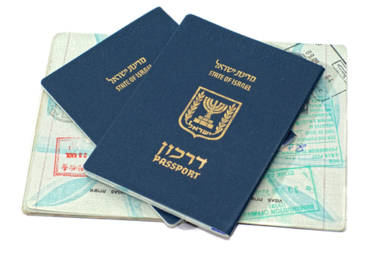
The Israeli Supreme Court admitted that halachically Brother Daniel was a Jew. But they said that the definition of Jew under the Law of Return was not based on Halachah, but on “the Jewish national-historical consciousness, and the ordinary secular meaning of 'Jew' as understood by Jews". The Court felt great sympathy for Brother Daniel; they were sure of his sincerity and had great difficulty in reaching a decision. They held, however, that though for the purpose of the Law of Return adherence to the particular practice of the Jewish religion was not essential, apostasy to Christianity would prevent that person being considered a Jew under the Law of Return. So, no citizenship.
Some years later the Brother Daniel decision was incorporated into Statute Law by the Law of Return (Amendment) Act 1970 which provides, for the purposes of that Act, that "Jew' means anyone who is born to a Jewish mother, or who has converted
to Judaism, and who is not a member of another religion. Note that that it does not state any particular form that the conversion must take, and note also that pressure by religious parties may bring about a change in the law regarding conversion. As far as the Ethiopians are concerned the debate continues and various Rabbinical and Israeli government commissions are still examining the question.
Arguments in favour of the Falash-Mura being considered Jewish are:
(a) they never really converted but merely left the Ethiopian Jewish mainstream - in effect, they are really non-practising secular Jews,
(b) those that converted did so to avoid being killed. Such conversions do not count,
(c) they should be allowed into Israel to join their families.
Arguments against them being considered Jewish:
(a) they converted for economic benefit and not (like the Marranos of Spain) to avoid death,
(b) they left Judaism of their own free will and true Ethiopian Jews do not consider them to be Jewish,
(c) Many of them are sincere, practising, Christians who would continue missionary work in Israel.
Since November 1995, Falash Mura are granted temporary residence for three years. If they convert within that time they can receive immigrant status under the Law of Return.
Finally, How are they faring in Israel?
The story of the Ethiopian Jews has a fairy-story quality about it. But, unlike other fairy stories, we cannot say they all lived happily ever after. So far, we have dealt with the history of the Ethiopian Jews and how they got to Israel. It is too early to form firm conclusions about how they are faring in Israel, and there are conflicting reports, but I should like to mention some of the "acculturation" difficulties:
On the negative side:
(1) A. large number of Ethiopian Jews have suffered from Psycho- pathological symptoms of anxiety and depression. One hopes that the longer they are in Israel, the fewer the symptoms. The older the immigrant, the greater the problem, but even the young are often depressed by the secularism and 'non-religiosity' of Israel. Suicide rate among Ethiopian immigrants has been 3-6 times that of the general Israeli population.
(2) Ethiopian Jews in Israel complain that their own religious customs are not sufficiently recognised. Remember, they have not followed Rabbinic rules - only Torah rules. There are problems about their method of slaughtering animals for food and their desire to sacrifice sheep. If a bride proved not to be a virgin the marriage, under their laws, could be annulled.
(3) They were shocked to find that Jerusalem was not the Holy City they expected. They could not understand that in Jerusalem some Jews, on Shabbat, drove cars and worked, and that unmarried people could live together.
(4) Many village 'elders' now found themselves 'misfits' - stripped of respect and rank. The highly structured society of village life in Ethiopia had disappeared, and a generation gap is developing between traditional parents and their children.
(5) There have been cultural and racial disputes between Ethiopian Jews and Russian immigrants who complain about the 'positive discrimination' which gives Ethiopian immigrants greater financial advantages.
(6) There are difficulties absorbing Ethiopian children into normal Israeli schools. Many Israeli parents of high achieving children remove them from schools that have a high percentage of Ethiopian students.
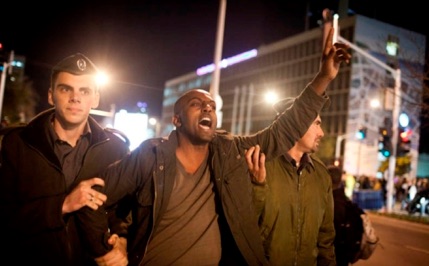
Arrest of protester at a demonstration in central
Tel Aviv opposing the discrimination and racism against Ethiopian Jews.
(7) It is feared the Ethiopian Jews are becoming an 'under class'. They are burdened by social discrimination that makes them live apart. Their low level of education and lack of experience of living in a modern state put them at a disadvantage when seeking work or advancement. They are becoming entrenched as the poorest group in Israel, and many still live in 'temporary quarters'. There is a danger that they will become like the black community in USA.
(8) The 1995 report of the Israel Association for Ethiopian Immigrants says that youth crime among them has become a problem. Very few of their children are successful at school, and 7,000 have quit school and spend their time on the streets.
(9) Their grievances burst out in a violent demonstration in 1996 when thousands of Ethiopian Jews demonstrated, and about 70 people were injured. The immediate cause was the fury about Magen David Adom's decision, supported by the Ministry of Health, and reported in the newspaper Ma'ariv, not to use their donated blood for transfusions. The blood had, for the most part, been donated by Ethiopian Jewish soldiers.
It is well known that many cases of AIDS have resulted worldwide by the use for transfusions of blood infected with the HIV virus and Israel was similarly affected. HIV is more prevalent among some Africans, and it was calculated that the incidence of HIV among the Ethiopian immigrants is far, far greater than other Israelis. Accordingly the medical authorities destroyed the blood, except some of special types.
The blood problem was, so to speak, the 'last straw', and the demonstration induced the general population, and also the police, to be more sympathetic to them. Another result is that the Government promised that all the blood would be kept frozen for six months and, after further tests, used if it was safe to do so. The Government also promised further funds for education, housing, community synagogues and also to employ more women is the civil service.
On the more positive side Government officials say:
(1) Integration is beginning. Over 600 Ethiopian children are in college. In one year the number of Ethiopian children needing special education dropped from 70% to 30%.
(2) 50% of Ethiopian immigrants have bought their own homes with government grants of about £70,000.
(3) About 50 Ethiopians are army officers. 90% of the Ethiopians of mobilisation age are in the Israeli Defence Force (although it is thought that their general level of motivation is poor).
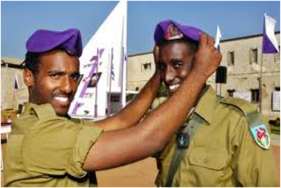
Ethiopian twin brothers in Israeli army.
(4) Vocational ambitions of the 1984/85 (Operation Moses) immigrants are much higher than the 1991 (Operation Solomon) arrivals. It suggests that they just need more time to adjust.
(5)The great majority of the Ethiopian workforce have jobs.
(6) There have been many cases of marriage between Ethiopians and 'white' Israelis.
(7) Provided the Ethiopian Kessim (religious leaders) study and accept the Oral Law (Talmudic and Rabbinic), as well as the Torah they can become rabbis. Twelve were ordained in August 1995.
And now, to conclude:
A picture of how an Ethiopian Jewess, now about 30 years old, sees the situation. The lady is Meskie Shibru-Sivan, who has become a well known singer and TV performer. Her charm, good looks and perfect Hebrew made her an inspiration to her fellow immigrants, and serve as an example of successful integration. Her performances manage to bring her audiences to a new understanding of the Ethiopian immigrant experience.
Her play "Song of the Nice Guy” tells of an Ethiopian Jewess whose life takes her from a simple village in Gondar, through a gruelling trek to Sudan and to her encounters with a callous bureaucracy in Israel.Along the way there are tragedies: her new born son dies in Sudan and she must leave his body in the desert sands. Her husband leaves her when stress and despair overcome him in Israel. But the play is not all tears and suffering. Shibru- Sivan's simple heroine also displays undying heroism, humour and strength of spirit.
Shibru-Sivan says she found it very difficult to adjust to the aggressiveness of Israel society, and it is a shame that Ethiopians must shed their innate gentleness in order to cope with life in Israel – but it is necessary. She has encountered racism in Israel but would not say Israel is a racist society Her husband is a 'white' Israeli, and she says people look at them as if they were creatures from the moon!
I can end in no better way than to quote a passage from the Encyclopaedia Judaica. It was written some years ago referring to Operation Moses in the mid 1980s, but it is still relevant today.
It reads:
“...Members of the Ethiopian Diaspora began arriving in Israel in large numbers only in recent years. Ethiopian immigration to Israel is characterized by youth, incomplete families, and a high rate of illiteracy. A majority of the Ethiopian immigrants are under 18 years of age and close to 70% lack elementary education. The immigrants reach Israel after undergoing severe hardships in the process of leaving Ethiopia. Some do not withstand the difficulties of the trip; their death rate is relatively high.
Once in Israel, the immigrants from Ethiopia encounter a new, strange and even frightening reality – with white people, high-rise buildings, roads, electrical appliances, an unknown language, a new diet etc. When we also take into consideration the health problems from untreated illnesses we can understand the tremendous difficulties this community encounters in becoming acculturated in Israel”.
So: What the Ethiopian Jews were originally is still shrouded in mystery. What they are now is fairly clear. What they will be in Israel remains a question mark...
-oOo-